Saturday, July 26, 2025

L4-L5 Herniated Disc: Causes and Key Symptoms Explained

in Herniated_disc at  July 26, 2025

Herniated Disc

A herniated disc, also called a slipped or ruptured disc, happens when one of the soft cushions between the bones in your lower back gets pushed out of place and presses on nearby nerves, causing pain.

Your lower back (called the lumbar spine) has five bones stacked on top of each other, and between each bone is a soft, jelly-like disc that acts like a shock absorber. These discs help your spine move smoothly and protect it from impacts.

Over time, or from repetitive strain or injury, these discs can weaken or tear. When that happens, the jelly-like center can leak out through the tear and press on the nerves around the spine. This is what we call a herniated or ruptured disc.

People often say “my disc is bulging” or “my disc slipped out,” but it really means that inner gel has pushed out and is causing nerve pain in the lower back or legs.


Numbering Structure of the Spine


 1. Numbering Structure of the Spine

 The spine is divided into 5 regions:


RegionEnglish NameNumber of VertebraeNumbering Example
1. CervicalCervical Spine7C1 ~ C7
2. ThoracicThoracic Spine12T1 ~ T12
3. LumbarLumbar Spine5L1 ~ L5
4. SacralSacral Spine5 (fused)S1 ~ S5 (fused as one)
5. CoccygealCoccyx3–5 (fused)Coccyx (collective term)

2. Lumbar Spine (L1–L5)

Vertebra NumberLocation DescriptionMain Function
L1Upper part of the lumbar spineSupports spinal structure
L2
Attachment point for muscles and ligaments
L3Middle part of the lumbar spineBalances movement and stability
L4Lower lumbar regionStarting point of nerve branching
L5Lowest lumbar vertebra, connects to pelvisConnects to sciatic nerve; bears major weight

3. Why is the L4-L5 Area Prone to Problems?

The disc between the fourth and fifth lumbar vertebrae (L4-L5) is the spot that gets damaged most often. the L4-L5 disc takes a lot of stress because it’s located near the lower part of the spine where a lot of body weight and movement pressure concentrate. It supports much of the upper body’s weight and allows for bending and twisting motions, which makes it more vulnerable to wear and tear or injury over time.


4. What Symptoms Occur When the L4-L5 Disc Herniates or Ruptures?


1) Lower Back Pain (Lumbago)

One of the most common symptoms when the L4-L5 disc herniates or ruptures is lower back pain. You may feel a dull, persistent ache in the lower central part of the back, and the pain tends to worsen with movement or changes in posture. Lifting heavy objects or bending the back can intensify the pain.


2) Leg Pain and Numbness (Sciatica)

When the herniated disc at L4-L5 presses on nerve roots, pain and numbness can radiate down the leg as well as the lower back. This usually starts from the buttocks and spre down the back of the thigh, calf, and sometimes to the foot. The pain often feels sharp, shooting, or burning, and can be severe enough to be disabling. This condition is known as sciatica, with symptoms varying depending on the degree of nerve compression.


3) Sensory Abnormalities

Pressure on the nerves from the disc can cause sensory disturbances. You may experience numbness, tingling, or a “pins and needles” sensation around the toes, top of the foot, or calf. In severe cases, sensation in the toes may dull, and it can become difficult to distinguish hot or cold stimuli.


4) Muscle Weakness and Gait Problems

Severe nerve compression can affect muscle strength. You may develop “foot drop,” which is difficulty lifting the toes or foot. This makes walking or climbing stairs difficult and can cause dragging of the foot or limping. Weak leg muscles also increase the risk of frequent falls.


5) Bladder and Bowel Dysfunction (Risk of Cauda Equina Syndrome)

In very rare cases, severe disc rupture can compress the cauda equina nerves, causing bladder and bowel dysfunction such as loss of urinary control or bowel incontinence. This is a medical emergency requiring immediate hospital care and treatment.


6) Other Symptoms

Back and leg pain can limit daily activities and cause sleep disturbances. Pain and discomfort may also lead to psychological stress or depression.


4. In Conclusion

L4-L5 herniated or ruptured discs are common, but it’s very important to understand them well and respond early. If you experience symptoms like back pain, leg numbness, sensory changes, or muscle weakness, don’t ignore them—consult a specialist promptly. In most cases, with proper treatment and lifestyle changes, you can fully recover. So don’t worry too much—just keep managing your condition steadily. Even correcting bad exercise habits or posture can make a big difference. Wishing you a healthy back and a vibrant daily life! If you have any questions or want to know more, feel free to leave a comment anytime.

Thank you!


Wednesday, July 23, 2025

Causes and Management of Tremors and Muscle Spasms After Disc Surgery

in Herniated_disc at  July 23, 2025

Why Do Tremors and Spasms Occur After Disc Surgery?


After disc surgery, muscles may sometimes contract when they shouldn't. This can feel odd or mildly irritating, but when accompanied by pain—or if severe—it may even lead to paralysis. While these symptoms are fairly common and can cause anxiety, they rarely develop into serious medical problems.

Unwanted muscle contractions can take various forms, and it's often difficult to pinpoint a clear cause or classify them precisely. The terms used to describe them can be confusing, with overlapping meanings that make things more complicated.
For instance, the word spasm is frequently used in vague ways. It's often applied to describe musculoskeletal pain even when no actual muscle contraction is involved. Similarly, the word cramp originally refers to sudden, exercise-related muscle spasms but is now loosely used in a wide range of contexts. These terms are often used out of habit to explain pain that arises without an obvious cause.

When cramps or spasms feel particularly intense, people often blame "muscle tension." But this explanation doesn't always accurately reflect the real symptoms, and in many cases, it's unclear whether the contraction is partial or full-body.

These contractions may be closely related to spinal disc issues. When a disc presses on a nerve, the connected muscles can react abnormally, leading to spasms, tremors, or involuntary contractions. Lumbar disc problems, in particular, can trigger these reactions along the nerve pathways that run into the legs or buttocks. This can interfere with daily activities and sometimes result in severe pain. If such symptoms are mistaken for simple muscle strain and dismissed, treatment might be delayed—so accurate diagnosis is important.

Unwanted muscle contractions are real, and in some cases, extremely painful. Many people have experienced dramatic episodes, such as menstrual cramps, sudden calf cramps during exercise, or intense foot cramps during sleep. These examples show that even seemingly minor muscle contractions can cause disproportionately intense pain. When nerve compression from a disc is the cause, the resulting pain may be much deeper and more complex than that of a typical muscle spasm.


Muscle spasm in leg after disc surgery
Tremors and Involuntary Muscle Contractions

Basics of Muscle Contraction

Muscle movement is driven by bundles of protein filaments that operate much like Velcro. However, rather than simply sticking together, countless tiny hooks bend in one direction, release, reattach, and bend again in a repeated cycle. This motion is similar to the way an inchworm crawls—pulling one part of its body forward while anchoring the other. Muscle proteins function in a comparable way, but at an unimaginably fast and microscopic level.

As these microscopic protein actions repeat countless times, they result in visible muscle contraction. If you magnify this process, you can begin to understand how we’re able to move an arm or walk with our legs. To learn more about this fascinating mechanism, it can be helpful to explore how micro-muscles and sarcomeres work.
Yet when we look at this contraction process from a biochemical perspective, it becomes incredibly complex. Many aspects are still not fully understood, with some mechanisms appearing to operate at extremely fine and delicate levels. Additionally, there are numerous ways in which this process can go wrong, and the effects are often unpredictable and highly intricate.


What causes sharp pain in the lower back?

Symptoms often described as "lower back spasm" or "pulled back" are merely poetic or informal ways to depict the sudden onset of intense lower back pain. In reality, the causes of back pain are highly diverse, and accurately identifying the root cause remains one of the most challenging tasks in medicine. For this reason, I have written extensively on back pain over the past several years and have even authored books on the subject.

Sudden back pain is not a simple symptom but rather a single outcome that can result from various causes. The greater the intensity of the pain, the more people tend to associate it directly with specific mechanisms like injury or spasm; however, the severity of pain is not a reliable indicator for determining its cause.

Back pain often feels like a spasm because the pain itself triggers a reflexive muscle response. In other words, when pain occurs, the body unconsciously braces or tightens. This reaction is a consequence of the pain, not the cause.

This acute stiffness eventually leads to restricted movement and can sometimes feel like a muscle spasm. However, the underlying cause is far more complex and cannot be simply explained as “a cramp.”


Protective muscle spasm, or "muscle splinting"

The concept that muscles act as protective spasms or serve as a kind of “muscle splint” has not yet been clearly proven. Muscles respond in various ways depending on the situation, and their behavior is complex and difficult to predict. The body sometimes exhibits competing and confusing reflexes, meaning it is literally unsure how to respond. These reactions can change continuously depending on the environment and over time.

However, one clear fact is that excessive muscle contraction around fragile or injured tissues is never desirable. For example, if muscles attached to a severely fractured bone go into strong spasms, this can actually hinder recovery or cause additional damage to healthy tissue. Excessive contraction can ultimately cause bigger problems rather than protecting the tissue.

So which scenario is more likely? While not simple spasms, muscle responses that are in some form “protective” or sometimes the opposite definitely exist. In fact, we can think of at least three such examples:

  • Reflexive muscle tension — muscles unconsciously tighten when sensing pain or threat.

  • Asymmetric muscle compensation — other muscles overwork to avoid the injured area.

  • Pain-avoidance movement — certain muscles contract persistently to avoid specific postures or motions.

These reactions aren’t clearly classified as “spasms,” but in some ways, they function with the intent to protect tissue. At the same time, these protective responses can become harmful or develop into chronic problems.


What does it mean to feel tight and stiff?

Our muscles never fully relax unless paralyzed; they maintain a slight, continuous contraction and tension at all times. This basic muscle tone is essential for maintaining posture and supporting the body. Muscle contraction is not simply an on/off switch but varies in intensity and degree. Even the same level of tension can feel different depending on the individual and their physical condition. Therefore, descriptions like “tight” or “stiff” are subjective sensations reflecting discomfort in muscle tone beyond usual levels. The concept of a “normal muscle tone” is difficult to define, and objective, reliable measurements are nearly impossible. Although there are devices to measure muscle tension, they are very rare, and most assessments rely on subjective judgment, like that of massage therapists.

The texture of healthy muscles varies widely and does not necessarily correlate with common pain or stiffness. The feeling of “aching” is also subjective and may be related to other issues such as muscle spasms.

“Stiffness” does not directly indicate tissue condition nor does it strongly correlate with objective changes like reduced range of motion. It is usually a mild form of discomfort and should not be regarded as an accurate indicator of muscle tension.


Muscle Cramps: Tremors and Vibrations Caused by Fatigue — An Interesting Muscle Phenomenon

Muscle fibers do not contract all at once as commonly believed. Instead, each motor nerve is divided into small groups called “motor units.” Rather than all motor units contracting simultaneously, these groups contract alternately like pistons. Because many motor units are continuously going through different phases of contraction and relaxation, we experience smooth and natural muscle movement.

However, there is an interesting exception. When muscles become too fatigued and multiple motor units fail to contract properly, there aren’t enough active motor units for smooth contraction, causing the switching system to malfunction. This results in muscle trembling or rippling waves during intense exercise.


The Reality of Muscle Relaxants

Using muscle relaxants may seem like a good idea, but in reality, they often are not as effective as expected. A common over-the-counter muscle relaxant is methocarbamol (such as Robaxin), but studies have shown that its effect is often no greater than that of a placebo.

Prescription muscle relaxants like carisoprodol also tend to have weak effects, and sometimes, misinformation that these drugs act as stimulants can even increase feelings of tension.

Muscle tone is controlled primarily by the brain, and it is difficult to completely relieve muscle tension with medication alone.


Conclusion: Understanding and Managing Symptoms is the Key

Tremors, spasms, and involuntary muscle contractions after disc surgery are common and often distressing. However, these reactions do not necessarily indicate a serious underlying problem. During the recovery process, the body may respond in various ways to protect itself or to regain balance.

The important thing is not to ignore these symptoms or overreact to them, but rather to try to understand the signals the body is sending. If needed, a professional diagnosis can help identify the cause, and symptoms can often be managed through a combination of exercise, physical therapy, or medication.

Ultimately, recovery is not just about treatment—it's about listening to the body and learning to adjust. What we need is not suppression, but regulation; not fear, but understanding. Through this process, the body gradually regains its balance, and we can return to a healthier, more stable daily life.

Wednesday, November 13, 2024

Health, They say that when your body temperature goes up, the disc calcification melts. Is that true?

in Disc_calcification at  November 13, 2024

Will raising the body temperature really melt disc calcification?


temperature

Understanding how calcium buildup happens can help you believe that natural healing is possible. Calcium buildup is when inflammation and waste products collect in joints and tendons, hardening like stones. Even if you have surgery to remove it, if your body is still prone to inflammation and can’t remove waste through the blood, the pain will keep coming back. The key is that calcium buildup can be naturally healed by your body. When your body temperature rises, the calcium will begin to dissolve on its own, and toxins will be washed out through the blood, helping cells regenerate. Grounding, or connecting with the earth, plays an important role in preventing chronic inflammation. It helps stop new inflammation from forming and neutralizes the (+) charge that causes pain, which helps reduce the pain. It’s important to create a healthy environment in your body. When toxins are removed, your body temperature rises, and your blood becomes clearer, inflammation and pain will go away too.  Calcium buildup is when calcium salts collect in soft tissues of the body, and this can cause problems like kidney stones, arthritis, and heart disease. Luckily, there are natural ways to reverse calcium buildup and restore balance to your body. One way is to eat foods rich in magnesium, which helps prevent calcium from building up in the soft tissues. Foods like leafy greens, nuts, seeds, and whole grains are great sources of magnesium and can help reverse calcium buildup. Another way is to drink lots of water throughout the day. Water helps flush out toxins from the body and prevents calcium salts from accumulating. In addition to changes in diet, regular exercise can also help reverse calcium buildup. Exercise improves blood circulation and lymphatic drainage, helping to remove calcium deposits in the soft tissues. Including anti-inflammatory foods like turmeric, ginger, and garlic in your diet can also help reduce inflammation in the body and prevent further calcium buildup. Managing stress is also important. Practices like meditation, yoga, and deep breathing can lower stress levels, which in turn can help reverse calcium buildup. Chronic stress causes inflammation in the body and can make calcium buildup worse, so managing stress is key. By making these natural lifestyle changes, you can effectively reverse calcium buildup and improve your overall health and well-being.


Copyright2021olympithecus

Tuesday, November 12, 2024

Health, During a lumbar disc surgery, the most important structure, the ligament flavum, is removed.

in Herniated_disc at  November 12, 2024

The removal of the ligament flavum causes the lower back to become unstable and wobble.


The ligament flavum in the lower back is an important structure in the spine that plays a key role in our body's stability and movement.

The ligament flavum is located at the back of the spine and connects the discs (intervertebral discs) and vertebrae (spinal bones). It connects the vertebrae of the upper and lower parts of the spine, helping to maintain the stability of the lower back. The ligament flavum is made of thick elastin fibers, which make it very flexible and strong. These elastin fibers allow the ligament flavum to stretch, supporting the spine's natural curves. In other words, when the spine bends, the ligament flavum stretches, and it helps the spine return to its original position.


1. Main Functions of the Ligament flavum


   1.1 Providing Stability to the Spine


The ligament flavum is one of the key structures of the spine and helps maintain its stability. It prevents the spine from bending too far backward or moving excessively, helping to keep the spine aligned. This function is especially important in the lower back and neck.


   1.2 Limiting Spine Movement


The ligament flavum also prevents the spine from moving too much. By maintaining the right strength and flexibility, the ligament limits excessive bending or straightening of the spine, preventing injury caused by too much movement.


   1.3 Restoring the Spine’s Natural Position


The ligament flavum helps the spine return to its natural position after it has been bent. When the spine bends too much, this ligament flavum provides the force needed to return the spine to its original state. This process helps maintain the spine's natural curves and supports the body's center of gravity.


   1.4 Absorbing Shock


The ligament flavum helps absorb external shocks and pressure on the spine. It protects the spine by spreading out excessive pressure on the vertebrae and discs. If the ligament flavum is not healthy or gets damaged, it can’t absorb these shocks properly, which could lead to disc problems or nerve compression.


2. Location of the Ligament flavum


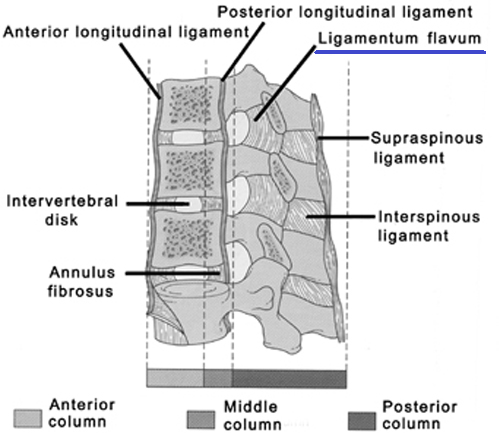
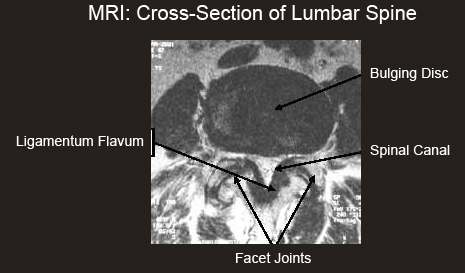
As shown in the diagram below, the ligament flavum is located at the back of the spine, connecting the discs (intervertebral discs) and vertebrae. The diagram shows a view from behind the body. The ligament flavum is inside the vertebrae, and the second diagram shows a cross-sectional view. The ligament flavum is located very close to the discs. Therefore, if surgery is needed for a disc rupture, a cut is made at the back, part of the vertebrae is removed, and the ligament flavum is taken out. Then the nerves become visible, and the surgeon can reach the disc. So, in order to remove a ruptured disc, all obstacles along the way need to be cleared.


Figure 1: ligament flavum


Figure 2:  MRI Section


Figure 3: Location of the Ligament flavum in an MRI Image


3. Problems Caused by Removing the Ligament flavum


The ligament flavum plays an important role in connecting each vertebra (spinal bone) to the vertebrae above and below it, providing stability to the lower back.

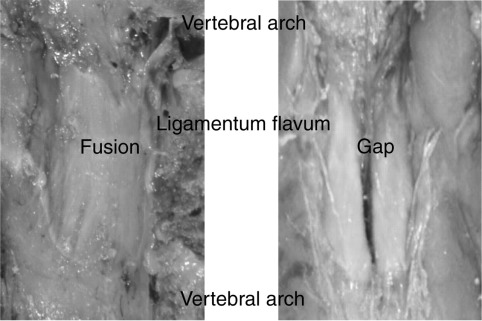
As shown in the picture below (4), the ligament flavum is made up of strong elastin fibers.

Once the ligament flavum is removed through surgery, it cannot heal or grow back. This means that the stability it provides to the lower back will be lost. Without the ligament flavum, the back becomes unstable and can sway back and forth. Standing still becomes very wobbly and unsafe, and in severe cases, the back can bend too much forward or backward.


Figure 4: The Ligament flavum Made of Strong Elastin Fibers


4. Conclusion


If the ligament flavum is removed due to a herniated disc, life can become very difficult.


Copyright2021olympithecus


"Ligament flavum" #Ligament flavum

Sunday, November 10, 2024

Health, Let's consistently rehabilitate with the most important hamstring exercises after surgery.

in Exercise at  November 10, 2024

Let's do hamstring exercises easily and consistently at home.


The main cause of herniated discs is excessive strain on the lower back. Everyday activities such as bending, lifting heavy objects, or sitting for long periods can trigger a herniated disc. After surgery for a herniated disc, it’s important to avoid bending the back to prevent recurrence. Generally, it’s recommended to rest in bed and engage in walking exercises for several months following surgery. However, if you maintain a fixed posture without bending your back for an extended period, your body may adapt to this posture, leading to muscle stiffness and imbalances. While walking exercises are beneficial, they may not be enough to release tight muscles. Moreover, excessive exercise can increase the risk of recurrence, so it’s important to start with caution. Among the various exercises to relieve muscle stiffness, let's focus on hamstring exercises that can be easily done at home. 


What is Hamstring Exercise?


The hamstrings refer to the group of muscles located at the back of the thigh. They are made up of the biceps femoris, semitendinosus, and semimembranosus, and primarily function to bend the knee and extend the hip. Properly stretching the hamstrings helps balance the back and legs and is effective in relieving muscle stiffness.
How to Perform Hamstring Exercise.

1. Place Your Foot Up
Prepare a high object (e.g., a box or window sill) where you can rest your foot on a flat surface. Place your foot comfortably on the object and straighten your knee naturally.

2. Bend and Straighten Your Knee
Slowly bend and straighten your knee to stretch the hamstrings. When you straighten your knee, if you feel a pull at the back of your thigh, it means the exercise is working well.

3. Exercise Effect
This exercise allows you to stretch the hamstrings without bending your back, making it safe to perform after a herniated disc surgery. As the muscles loosen up, stiffness is relieved, and flexibility in the back and legs can improve.

4. Repeat

Perform 10-15 repetitions of bending and straightening the knee in one set. You can gradually increase the number of repetitions or time as you adjust.

 
Benefits of the Exercise
 
Back Protection:
Since the back is not bent, there is no pressure on the disc, making it safe to do even after herniated disc surgery.
 
Self-directed Exercise:
You can do this exercise alone at home, making it convenient at any time.
 
Muscle Stiffness Relief:
Properly stretching the hamstrings helps relieve stiffness in the back and legs.


Precautions

Proceed Slowly:
Avoid sudden movements and perform the stretches slowly and gently.

Check for Pain:
If you feel discomfort or pain during the exercise, stop immediately and consult a professional.

Rest After Exercise:
After exercising, take enough rest, and if you feel fatigued, take a break.

This exercise is a very safe and effective method to relieve muscle tension while protecting the back, even after herniated disc surgery. By practicing regularly, you will significantly improve flexibility in your back and legs and help relieve muscle stiffness!


.

 Copyright2021olympithecus
 
"hamstring" #hamstring  "exercises" #exercises

Popular Posts

Proudly Powered by Blogger.